Ghunsa is the largest and most significant village on the northern approach to Kanchenjunga, sitting at approximately 3,430 metres in the upper Ghunsa Khola valley — a deep, forested river gorge that climbs steadily north from Taplejung toward the glacial terrain of the Kanchenjunga Conservation Area above. A traditional Tibetan Buddhist settlement of stone houses, mani walls, and ancient gompas, Ghunsa serves as the primary staging point for trekkers and climbing expeditions approaching Kanchenjunga from the north, the last significant village before the trail enters the high-altitude terrain leading toward Khambachen, Lhonak, and ultimately the Kanchenjunga North Base Camp. The Kathmandu to Ghunsa Helicopter Shuttle with Himalayan Helicopter flies directly from Kathmandu, via a stop at Suketar or Taplejung in the far eastern foothills, to land at Ghunsa in a single journey — saving multiple days of approach trekking from Taplejung and placing trekkers and climbers already deep in the northern Kanchenjunga valley.
This shuttle serves two distinct groups. Trekkers and climbing expeditions on the Kanchenjunga northern route use it to skip the lower approach trail from Taplejung to Ghunsa — typically four to five days of walking through the Tamur and Ghunsa Khola valleys — and begin their itinerary already positioned well up the valley at one of the most culturally rich and scenically dramatic villages on the entire Kanchenjunga circuit. Local residents of Ghunsa and the surrounding Ghunsa valley communities use it as their primary practical connection to the outside world, given the genuine remoteness of the village from Taplejung by trail and the absence of any road access to the upper Ghunsa valley. This service operates on a private charter basis only, with every flight planned in direct coordination with the requesting party.
The standard walking approach to Ghunsa from Taplejung follows the Tamur river valley north before entering the Ghunsa Khola gorge and climbing steadily toward the village over four to five days of trail walking. The trail is rewarding but demanding, passing through steep forested terrain with significant daily altitude gain in the upper sections. Flying directly to Ghunsa removes all of these approach days, giving trekkers and expedition teams the maximum available time for the higher, more dramatic sections of the Kanchenjunga northern route above the village.
Ghunsa is not simply a transit stop on the way to Kanchenjunga Base Camp — it is a destination of genuine cultural significance in its own right. The village's Tibetan Buddhist heritage, expressed in its ancient monastery, its mani stone walls, its prayer flags, and the traditional architecture of its stone houses, gives it a character that distinguishes it from every other settlement on the Kanchenjunga circuit. Arriving in Ghunsa by helicopter means beginning your trekking itinerary already immersed in this extraordinary cultural environment, with the high peaks of the Kanchenjunga massif beginning to appear above the valley walls ahead.
From Ghunsa, the full northern Kanchenjunga trekking itinerary unfolds above — the high valley trail to Khambachen, the approach to Lhonak and the Kanchenjunga Glacier, the dramatic terrain around Pang Pema and the North Base Camp, and for climbing expeditions the high mountain routes above. Every stage of the most rewarding and dramatic section of the Kanchenjunga northern approach is fully preserved for trekkers who fly to Ghunsa, with only the lower valley approach days removed from the itinerary.
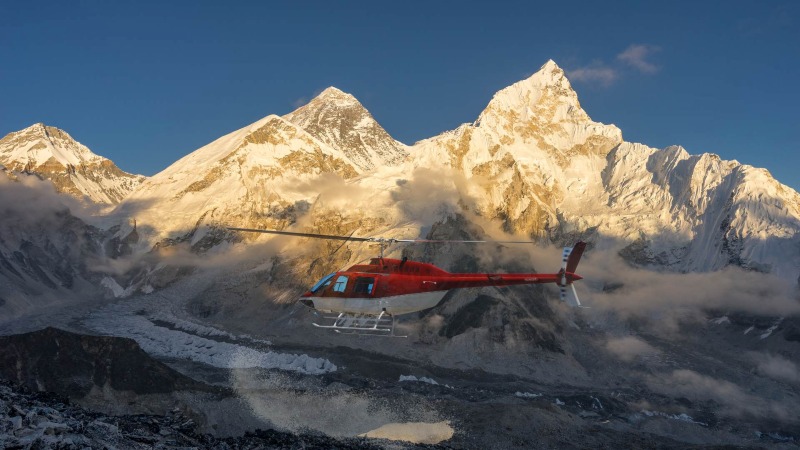
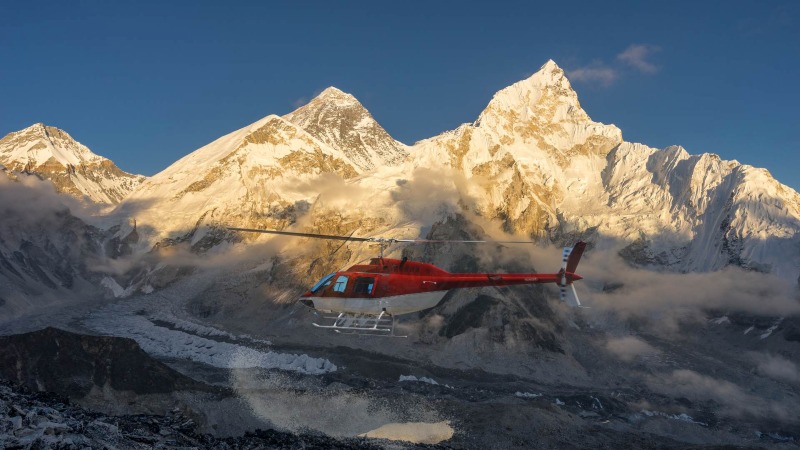
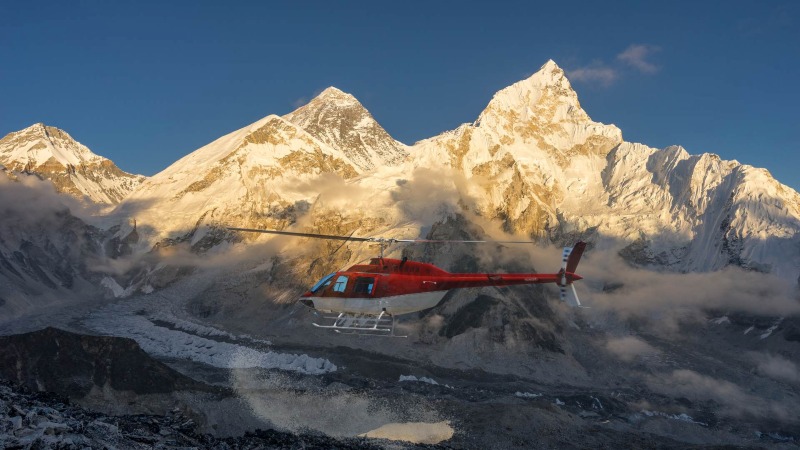
The flight from Suketar or Taplejung into the Ghunsa valley offers an aerial perspective on the Kanchenjunga massif that few visitors to Nepal ever experience. As the helicopter climbs the Ghunsa Khola valley from the south, the northern face of Kanchenjunga and the surrounding satellite peaks begin to fill the northern skyline in a way that gives an extraordinary sense of the mountain's scale before the landing. On clear days, the approach to Ghunsa from the air is one of the most dramatic mountain arrival experiences of any helicopter shuttle in the Himalayan Helicopter network.
Ghunsa and the handful of even more remote communities above it in the upper Ghunsa valley are among the most isolated settlements in far eastern Nepal. The trail from Taplejung takes four to five days even for fit trekkers, and there is no road access to the upper valley. For the families who maintain a permanent or seasonal presence in Ghunsa — the monastery community, lodge operators, herders, and their families — the helicopter shuttle is not a luxury but a lifeline for medical emergencies, essential supply runs, and personal travel between Ghunsa and the outside world.
Every Kathmandu to Ghunsa helicopter shuttle is a private charter, with the entire aircraft and schedule dedicated exclusively to your group. This format reflects the remote nature of the destination, the individualised nature of different expedition and trekking requirements, and the genuine logistical complexity of staging a flight through Suketar or Taplejung and into the Ghunsa valley. Our team works with every guest to design the most appropriate itinerary around their specific requirements.
Ghunsa sits at approximately 3,430 metres, a meaningful altitude for guests arriving by helicopter without the gradual ascent that the standard trekking approach provides over four to five days. While lower than the extreme altitudes of the upper Khumbu or Hinku shuttle series, 3,430 metres is high enough for sensible acclimatisation planning to be important, particularly for guests who have not recently spent time at altitude. We recommend consulting your physician before booking and planning a conservative first day in Ghunsa before continuing higher toward Khambachen and beyond.
Contact Himalayan Helicopter to discuss your group size, travel dates, equipment requirements, and specific objectives in the Ghunsa valley and above. Our team will design the most appropriate itinerary, assess the routing and operational requirements, and provide a detailed personalised quote. Pre-departure altitude guidance is provided for every booking.
Early morning transfer from your Kathmandu hotel to the domestic airport, with check-in assistance and baggage handling arranged by our team.
The helicopter departs Kathmandu and heads east across the central and eastern Nepal mid-hills, making a technical stop at Suketar airstrip or Taplejung for refuelling before continuing into the Ghunsa valley.
From Suketar or Taplejung, the helicopter follows the Tamur and Ghunsa Khola valleys north and into the increasingly dramatic upper valley terrain, with the Kanchenjunga massif appearing progressively ahead as the helicopter climbs toward Ghunsa. The landing at Ghunsa, with the village's ancient monastery and the high peaks of the Kanchenjunga northern route filling the skyline above, is one of the most evocative arrival moments of any shuttle in the far eastern Nepal series.
On arrival in Ghunsa, a sensible first day with adequate rest and hydration is advisable before continuing higher. The village itself, its monastery, and the surrounding valley make Ghunsa an entirely worthwhile place to spend an acclimatisation day, and the time is not wasted — the cultural environment and the emerging mountain views above reward unhurried exploration. From Ghunsa, the trail continues north toward Khambachen and the full northern Kanchenjunga itinerary above.
Return transport from Ghunsa can be arranged through Himalayan Helicopter via Suketar or Taplejung to Kathmandu, either at the end of a Ghunsa-based visit or after completing the northern Kanchenjunga trekking or climbing itinerary above. Advance booking of the return flight is recommended, particularly during the spring and autumn trekking seasons.
This service operates on a private charter basis, with pricing reflecting the full aircraft cost for the Kathmandu-Suketar/Taplejung-Ghunsa routing. Rates vary by group size, equipment requirements, and seasonal demand.
Please contact Himalayan Helicopter directly for a personalised quote. Early contact is recommended, particularly for expedition teams with fixed departure dates during the spring and autumn seasons.
The primary Kanchenjunga trekking and climbing season, with stable early morning flying conditions and excellent mountain visibility on the approach to Ghunsa. The most popular season for this shuttle among expedition teams and trekkers.
Outstanding post-monsoon clarity with the sharpest views of the Kanchenjunga massif on the aerial approach. The second main trekking season for the northern Kanchenjunga route and excellent conditions for both flying and trekking in the Ghunsa valley.
Cold conditions in Ghunsa and significantly colder above, but generally clear flying weather and very low visitor numbers. Suitable for well-equipped guests comfortable with cold mountain conditions.
Heavy monsoon precipitation in far eastern Nepal makes this the least predictable season for flying in the Ghunsa valley area. Flights operate when conditions allow, but significant schedule flexibility is essential.
Kanchenjunga northern route trekkers who want to save the lower approach days from Taplejung and begin their itinerary already positioned in the most culturally and scenically significant village on the northern circuit.
Kanchenjunga climbing expeditions using the shuttle to position teams and equipment efficiently in Ghunsa within their permit window, with the maximum available days for high-altitude acclimatisation and summit operations above.
Local residents of Ghunsa and the upper Ghunsa valley who rely on helicopter connectivity for medical emergencies, essential supply runs, and personal travel between the village and the outside world.
Photographers and documentary teams seeking access to the extraordinary cultural landscape of Ghunsa and the dramatic aerial and ground perspectives on the Kanchenjunga massif available from the northern valley.
The Kathmandu to Ghunsa helicopter shuttle requires an operator with genuine familiarity with the far eastern Nepal flying environment, including the approach conditions of the Ghunsa Khola valley, the weather patterns of the Taplejung district, and the specific logistical demands of operations in one of Nepal's most remote inhabited valleys. Himalayan Helicopter brings this experience to every Ghunsa mission, along with our commitment to the Ghunsa valley community whose dependence on this service goes far beyond the trekking season. Whether you are beginning a Kanchenjunga expedition, starting a northern circuit trek, or ensuring that a remote mountain community stays connected, we provide the service with the professionalism and care it deserves.
Begin your Kanchenjunga northern route adventure in one of far eastern Nepal's most extraordinary Tibetan Buddhist villages, skip the lower valley approach days, and arrive already immersed in the mountain culture and dramatic scenery that define this remarkable region. Contact Himalayan Helicopter today to check availability and book your Kathmandu to Ghunsa helicopter shuttle.
Yes. The helicopter flies from Kathmandu to Suketar or Taplejung for a technical refuelling stop, then continues into the Ghunsa Khola valley to land directly at Ghunsa at approximately 3,430 metres.
Flying directly to Ghunsa saves approximately four to five trekking days from Taplejung on the standard northern Kanchenjunga approach trail.
No. The Kathmandu to Ghunsa helicopter shuttle operates on a private charter basis only, with every flight planned and conducted as a bespoke mission for your group.
The Kanchenjunga northern trekking route requires a Kanchenjunga Conservation Area entry permit and a restricted area permit, both of which must be arranged before entering the conservation area. Climbing expeditions require an NMA climbing permit in addition. Our team can advise on current permit requirements at the time of booking.
 Maximum: 5 People/Helicopter
Best price guaranteed
Safe Tour Plan
Maximum: 5 People/Helicopter
Best price guaranteed
Safe Tour Plan
Response Time 0-2 Hours , Response Rate 100%
© 2026 All rights reserved. Himalayan Helicopters Pvt. Ltd.