Nestled in the far western Terai lowlands of Nepal, Bardiya National Park is the country's largest and most pristine wilderness reserve — a vast expanse of dense sal forests, open grasslands, and braided river channels that shelter some of Asia's most iconic and endangered wildlife. Unlike the more frequented Chitwan National Park, Bardiya remains refreshingly off the beaten track, offering an authentic and immersive jungle experience in near-complete solitude.
Himalayan Helicopter's exclusive Wildlife Safari & Heli Tour combines the thrill of aerial exploration with the raw intimacy of ground-level wildlife encounters. Fly in comfort over the Churia Hills and the Babai River valley, then descend into the jungle heart of Bardiya for an unforgettable encounter with nature at its wildest.
Bardiya National Park is widely regarded as Nepal's best destination for spotting the Royal Bengal Tiger in the wild. With one of the country's highest tiger densities, a sighting here is far more likely than in many other reserves across South Asia.
Bengal Tiger — Bardiya shelters a thriving population of wild tigers. Dawn and dusk jeep safaris along the park's network of tracks offer the best opportunity to witness these magnificent cats in their natural habitat.
One-Horned Rhinoceros — Reintroduced successfully into Bardiya after near-extinction, the greater one-horned rhino now roams the riverine grasslands in growing numbers. Spotting one at close range during a jeep safari is a humbling experience.
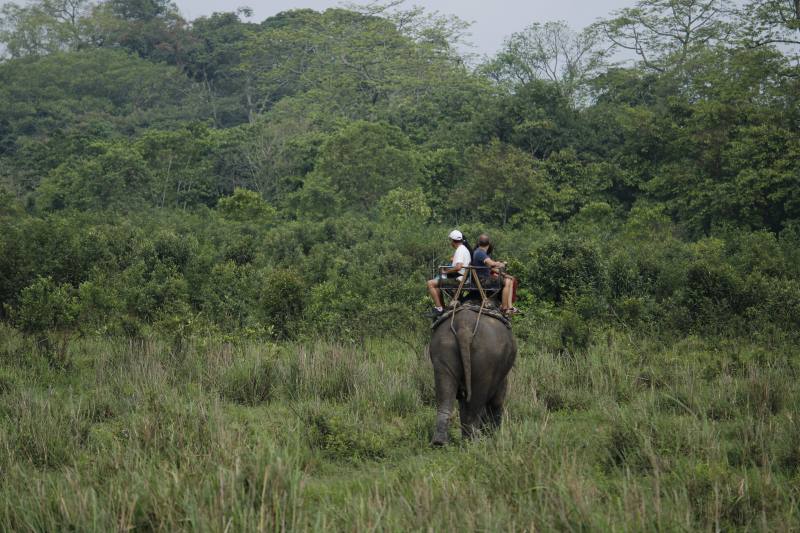
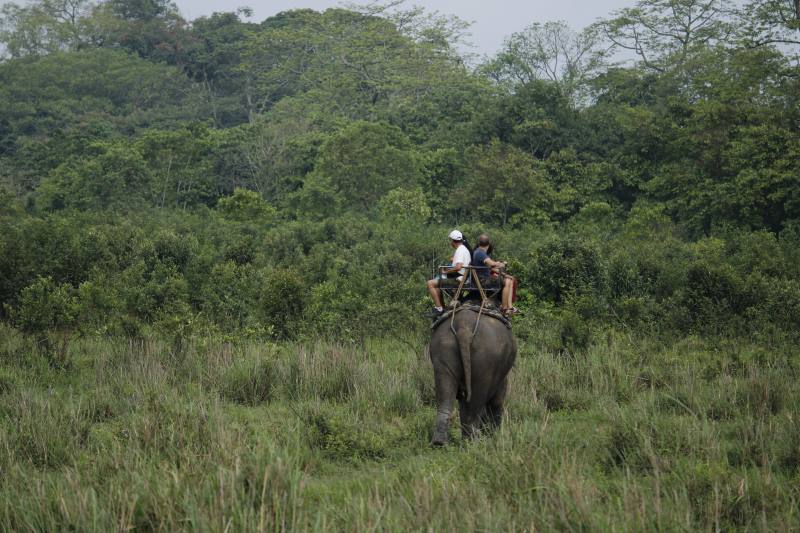
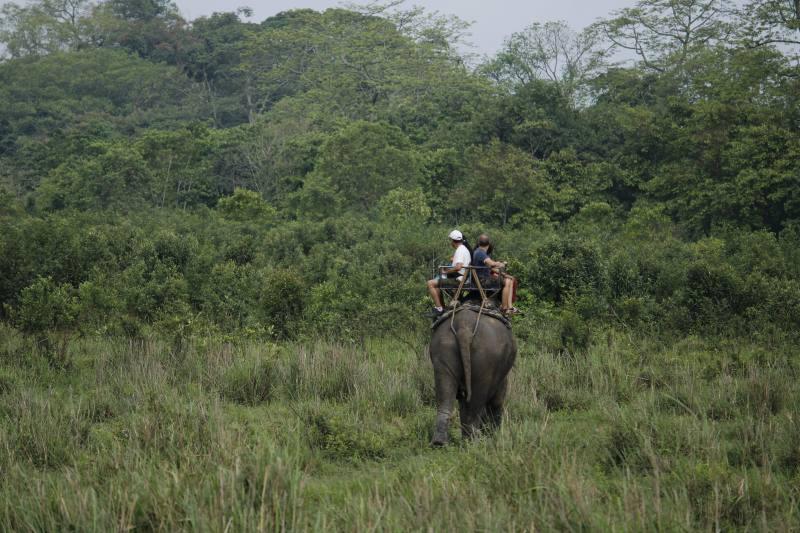
Wild Asian Elephant — Herds of wild elephants move freely through the park, particularly along the Karnali floodplain. The helicopter approach often reveals elephant groups from above before you encounter them on the ground.
Gharial and Mugger Crocodile — The Karnali and Geruwa rivers are prime habitat for both species of crocodile found in Nepal. Basking on sandy banks, they are a regular sight during river walks.
Swamp Deer (Barasingha) — Listed as a vulnerable species globally, Bardiya is one of the last strongholds of the majestic swamp deer in Nepal.
Leopard, Sloth Bear & Jungle Cat — The dense forest edges and rocky outcrops conceal leopards, while sloth bears are frequently spotted foraging along forest paths, especially in the early morning.
The journey begins with a scenic helicopter flight from Kathmandu (or Nepalgunj) that transforms the approach into an experience in itself. As you sweep over the Terai lowlands, the sheer scale of Bardiya's wilderness unfolds beneath you — a patchwork of golden grasslands, dark forest canopy, and silver river braids stretching to the horizon.
Flying with Himalayan Helicopter means you travel in modern, well-maintained aircraft operated by experienced pilots who know Nepal's diverse terrain intimately. The aerial perspective offers unparalleled photographic opportunities and a rare bird's-eye view of wildlife corridors and habitat that ground-based travelers never see.
Upon landing at the designated airstrip, your expert naturalist guide and safari vehicle are ready to begin the next chapter of your adventure without delay.
Day 1 — Kathmandu / Nepalgunj to Bardiya
Depart by helicopter from Kathmandu or connect via a short flight to Nepalgunj before continuing to Bardiya. Check in to your jungle lodge. Enjoy an afternoon orientation walk in the buffer zone followed by a briefing with your naturalist guide. Evening campfire and dinner at the lodge.
Day 2 — Full Day Wildlife Safari
Pre-dawn departure for the morning jeep safari into the park's core zone — the golden hour when tigers and rhinos are most active. Return for breakfast, then a midday river walk along the Karnali to spot crocodiles and Gangetic dolphins. Afternoon safari focusing on birdlife and elephant movement. Sundowner on the riverbank.
Day 3 — Safari & Departure
Early morning safari before a farewell breakfast. Helicopter departure back to Nepalgunj or Kathmandu, carrying memories of the wilderness that few travelers ever experience.
(Itinerary can be customised for 2-night or extended stays on request.)
The optimal season for a Bardiya wildlife safari is October to May, when the park is open and wildlife is most visible. The dry months of February through April are especially rewarding — grasses recede, water sources concentrate animals, and tiger sightings peak. The monsoon season (June to September) sees the park largely closed to visitors as the jungle floor floods and trails become impassable.
| Season | Months | Wildlife Visibility | Notes |
|---|---|---|---|
| Post-monsoon | October – November | Good | Lush green landscape, active birdlife |
| Winter | December – January | Very Good | Cool, clear days; excellent tracking conditions |
| Spring | February – April | Excellent | Peak tiger activity; dry grasslands |
| Pre-monsoon | May | Good | Hot but rewarding; elephants near water |
At Himalayan Helicopter, we believe that access to Nepal's most remote and extraordinary landscapes should never come at the cost of comfort, safety, or the environment. Our wildlife heli tours are designed with care — for the natural world we explore and for the guests who travel with us.
Ready to venture into Nepal's wildest frontier? Contact the Himalayan Helicopter team to customize your Bardiya Wildlife Safari & Heli Tour. We welcome private bookings, small group departures, and tailor-made itineraries for families, honeymooners, and wildlife enthusiasts.
Get in touch with us today to check availability and receive a personalised quote.
Himalayan Helicopter — Connecting You to Nepal's Most Extraordinary Places.
 Maximum: 5 People/Helicopter
Best price guaranteed
Safe Tour Plan
Maximum: 5 People/Helicopter
Best price guaranteed
Safe Tour Plan
Response Time 0-2 Hours , Response Rate 100%
© 2026 All rights reserved. Himalayan Helicopters Pvt. Ltd.