
| Item | Details |
|---|---|
| Tour type | Flyover, with no landing at EBC; some packages add a short stop at Kala Patthar or Syangboche |
| Start / end | Kathmandu (Tribhuvan domestic terminal), or Lukla for a shorter flight |
| Total duration | About 2–3 hours for a flyover with no landing, versus 4–5 hours for a landing tour |
| Route | Kathmandu → Lukla (refuel) → Namche → Tengboche → Everest Base Camp / Khumbu Glacier → back via Lukla |
| Peaks seen | Everest, Lhotse, Nuptse, Ama Dablam, Thamserku, Pumori |
| Max altitude (flyover) | Around 5,500 m near Kala Patthar and Base Camp |
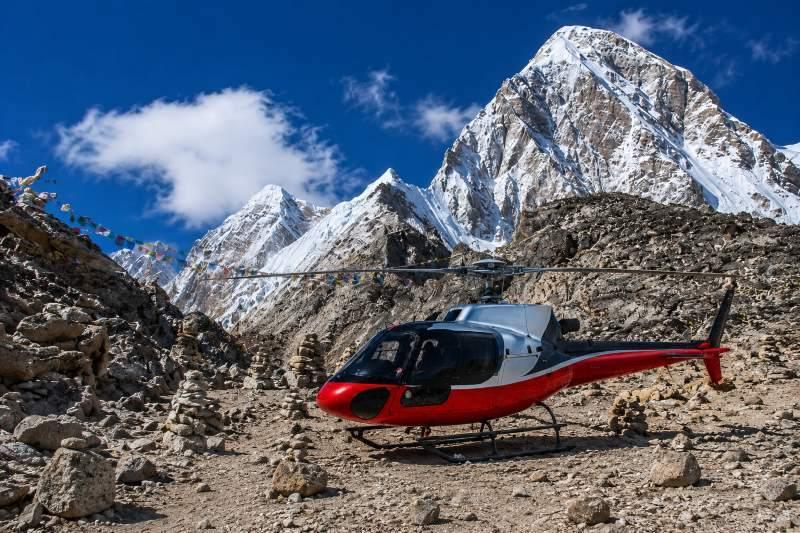
| Helicopter | Airbus AS350 B3e (Squirrel); Air Dynasty 9N-ANF is shown in your poster |
| Seats | 4–5 passengers, depending on weight and altitude limits |
| Departure time | Early morning, usually 6–7 AM, when the weather is clearest |
| Best season | Mar–May and Sep–Nov (Oct–Nov is the peak and clearest) |
| Approx. price (shared) | About US$1,000–1,400 per person from Kathmandu |
| Approx. price (private charter) | About US$4,500–6,000 per helicopter |
| From Lukla (cheaper) | Around US$550 per person; one operator lists a 1-day Lukla–EBC helicopter flight at $550 |
| Weather risk | Flights depend on the weather, so keep a buffer day |
| Altitude risk | Minimal for a flyover because there’s no prolonged stay at altitude |
| Book (per poster) | info@himalayanhelicopter.com |
Experience the ultimate Himalayan adventure with the Everest Base Camp Helicopter Tour operated by Himalayan Helicopter — Nepal's most trusted luxury helicopter company. Soaring above the ancient trails of the Khumbu region, this extraordinary one-day tour delivers what trekkers take weeks to reach: the raw, magnificent presence of the world's highest mountain, seen from the air and felt on the ground at over 5,500 metres above sea level.
From the moment our helicopter lifts off from Kathmandu's domestic airport, you are transported into one of the most dramatic landscapes on earth. Within minutes, the Kathmandu Valley gives way to terraced hillsides, deep river gorges, and the first snow-dusted ridgelines of the Himalaya. As you fly deeper into the Khumbu, jagged peaks rise on all sides — Ama Dablam's iconic spire, the vast bulk of Lhotse, the sheer walls of Nuptse, and finally, in full and overwhelming majesty, Mount Everest itself at 8,848.86 metres.
This is not simply a sightseeing flight. The Himalayan Helicopter Everest Base Camp Helicopter Tour includes a thrilling landing at Kala Patthar (5,545m), the finest natural viewpoint for photographing the South Face of Everest, followed by a relaxed breakfast at the legendary Hotel Everest View in Syangboche — the highest hotel in the world with a terrace looking directly at Everest. The entire experience is completed in a single morning, returning you to Kathmandu before midday.
Whether you are a solo traveller joining a shared group departure, a couple celebrating a honeymoon, a family travelling with elderly members, a photographer chasing the perfect Himalayan shot, or a corporate guest requiring a private charter, Himalayan Helicopter offers a perfectly tailored Everest helicopter experience designed around your comfort, safety, and sense of wonder. We also provide Kathmandu to Lukla Helicopter Shuttle Flight.
A Complete Everest Experience Without the Trek
The traditional Everest Base Camp trek takes between 12 and 14 days of strenuous walking across high altitude terrain. It demands physical fitness, acclimatisation time, and weeks of preparation. Our Everest Base Camp Helicopter Tour delivers the same iconic destination — and in many ways a more dramatic perspective — in a single day. You will witness everything that makes the Everest region extraordinary: the glaciers, the towering peaks, the legendary base camp, and the warmth of Sherpa culture, all without the physical demands of trekking. This makes the tour genuinely accessible to every type of traveller.
Guaranteed Window Seat for Every Passenger
At Himalayan Helicopter, we believe every guest deserves the best possible view. That is why we guarantee a window seat to every passenger on every flight. Our helicopters are configured to ensure unobstructed sightlines throughout the journey, so whether you are photographing the Khumbu Icefall or simply gazing at Everest's summit pyramid catching the morning light, your view is never compromised.
Landing at Kala Patthar — Everest's Greatest Viewpoint
Kala Patthar, which translates as "Black Rock" in Nepali, is a prominent ridge at 5,545 metres that juts out from the flanks of Pumori directly opposite the South Face of Everest. It is universally acknowledged as the single finest vantage point for viewing and photographing Mount Everest. Unlike Everest Base Camp itself, which sits on the Khumbu Glacier and cannot see the summit directly, Kala Patthar offers a completely unobstructed, close-range view of Everest's entire south and southwest face. Our helicopter lands directly at this extraordinary location, giving you time to step out, breathe the rarified mountain air, take photographs, and absorb one of the most awe-inspiring views available anywhere in the world.
Breakfast at Hotel Everest View — A Himalayan Icon
Hotel Everest View in Syangboche holds a Guinness World Record as the highest hotel in the world accessible by fixed-wing aircraft, situated at 3,880 metres with floor-to-ceiling glass windows facing Everest, Ama Dablam, Thamserku, and the surrounding peaks. After the exhilaration of the Kala Patthar landing, we fly you to Syangboche where breakfast is served on the hotel's famous terrace. Sipping hot tea or coffee while Everest fills the horizon in front of you is a singular experience that guests consistently describe as the most memorable meal of their lives.
Nepal's Most Experienced Mountain Pilots
Flying at high altitude in complex mountain terrain requires a level of skill and experience that goes far beyond standard aviation. Himalayan Helicopter's pilots are among Nepal's most experienced mountain aviators, each with thousands of hours of flight time specifically in the Himalayan region. They are trained in high-altitude landing procedures, adverse weather navigation, and emergency mountain rescue operations. Their expertise is the foundation of our outstanding safety record and the reason that experienced mountaineers, expedition teams, and discerning travellers consistently trust Himalayan Helicopter above all other operators.
Flexible Options — Shared Group or Private Charter
We understand that every traveller is different. Solo adventurers and budget-conscious travellers can join our shared group departure, where costs are divided among multiple passengers, making the experience far more affordable without compromising on quality or safety. Families, couples, photographers, and VIP guests who prefer complete privacy, schedule flexibility, and an exclusive experience can book a private helicopter charter. With a private charter, the aircraft, the pilot, and the entire itinerary are dedicated entirely to you and your group.
Ideal for Every Type of Traveller
The Everest Base Camp Helicopter Tour is carefully designed to welcome guests who might otherwise be unable to experience the Everest region. This includes elderly travellers who cannot undertake altitude trekking, families with young children, travellers with medical conditions that preclude strenuous activity, business executives with tightly scheduled itineraries, and first-time visitors to Nepal who want to experience Everest during a short trip. It is also the preferred choice of seasoned trekkers returning to Nepal who want to revisit Everest in a new and spectacular way.
5:30 AM — Hotel Pickup in Kathmandu
Your Everest helicopter adventure begins early. Our professional representative will arrive at your hotel promptly at 5:30 AM in a comfortable vehicle for your transfer to Tribhuvan International Airport's domestic terminal. Early departure is essential to take full advantage of the stable morning weather conditions in the Himalaya, which typically offer the clearest skies and calmest flying conditions of the day. Our team will handle all check-in procedures and ensure you are fully briefed before boarding.
6:00 AM — Departure from Kathmandu
The helicopter lifts off from Kathmandu, climbing steeply as the city spreads out below. The flight northeast towards the Khumbu region takes you over the Mahabharata hill range, across the Dudh Koshi river valley, and into progressively more dramatic Himalayan scenery. As the altitude increases and the vegetation shifts from subtropical forest to high alpine terrain, the first great peaks begin to appear. Pilots narrate key landmarks throughout the flight, helping you identify mountains and orient yourself within this extraordinary landscape.
6:45 AM — Refuelling Stop at Lukla
The helicopter makes a brief stop at Tenzing-Hillary Airport in Lukla (2,860m), famously regarded as one of the most challenging commercial airports in the world due to its short, steeply inclined runway perched on a mountainside. This refuelling stop is both a practical necessity and an opportunity to stretch your legs briefly, observe the bustling activity of this mountain gateway town, and prepare for the final ascent into the high Khumbu. The stop is short — typically 15 to 20 minutes — and you will soon be back in the air heading deeper into the mountains.
7:15 AM — Flight Over Everest Base Camp and Khumbu Glacier
Departing Lukla and climbing rapidly, the helicopter enters the high Khumbu Valley. The scale of the landscape becomes overwhelming at this point — massive granite walls draped in glacial ice, moraines thousands of metres high, and the blue-white chaos of the Khumbu Glacier spreading across the valley floor. The helicopter flies directly over Everest Base Camp, giving you a bird's-eye view of the colourful expedition tents, equipment depots, and the famous Khumbu Icefall that begins the route to the summit. The sight of the icefall from above — a churning, fractured cascade of ice blocks, some the size of houses — is one of the most dramatic moments of the tour.
7:45 AM — Landing at Kala Patthar (5,545m)
The helicopter descends to land at Kala Patthar, and the door opens onto crisp, thin mountain air with Everest dominating the entire southern horizon. At this altitude, the scale of the mountain is almost incomprehensible — the summit ridge, the South Col, the Yellow Band, the Hillary Step, all identifiable features of the world's most famous climb, laid out before you in extraordinary clarity. Spend time walking the short ridge, photographing from multiple angles, and simply absorbing the experience of standing at 5,545 metres with the world's highest peak within touching distance of the horizon. Our pilots are on hand to assist and advise, and the stop allows ample time for photography before departure.
8:15 AM — Breakfast at Hotel Everest View, Syangboche (3,880m)
From Kala Patthar the helicopter descends to Syangboche airstrip, a brief flight of just a few minutes, where Hotel Everest View awaits. This remarkable property has welcomed mountaineers, explorers, and adventurous travellers since 1971, and its terrace remains one of the most photographed hotel views on earth. A warm, satisfying breakfast is served — hot beverages, eggs, bread, fresh accompaniments — while Everest, Ama Dablam, and the full panorama of the Khumbu Himal fill the windows and the open air around you. This is a moment to relax, reflect, and savour the extraordinary morning you have just experienced.
9:15 AM — Return Flight to Kathmandu via Lukla
After breakfast, the helicopter departs Syangboche for the return journey to Kathmandu. Flying back via Lukla for a final brief fuel stop, the return journey offers another extended sequence of Himalayan aerial views, allowing you to see familiar peaks from new angles and absorb the full breadth of the landscape one final time before the mountains give way again to the foothills and the valley of Kathmandu.
11:30 AM — Arrival in Kathmandu
The helicopter lands back at Kathmandu domestic airport by approximately 11:30 AM, where your Himalayan Helicopter representative will be waiting to escort you to your return vehicle. You will be transferred back to your hotel with the afternoon entirely free — an extraordinary Himalayan journey completed, and a lifetime of memories secured, all before lunchtime.
Himalayan Helicopter offers two distinct booking options to suit different budgets, group sizes, and preferences. Both options use identical aircraft and operate the same itinerary to the same destinations with the same experienced pilots and premium service standards. The choice is simply one of exclusivity and scheduling flexibility.
The shared group joining option is the most popular choice for solo travellers, couples, and small groups looking to experience the Everest Base Camp Helicopter Tour at the most accessible price point. In this format, the helicopter carries multiple passengers from different bookings, with costs shared proportionally. Himalayan Helicopter operates shared departures on a fixed schedule throughout the season, with guaranteed minimum departure standards ensuring the tour always proceeds as planned. Even on a shared departure, every guest receives a window seat, the full itinerary, and Himalayan Helicopter's signature standard of service.
The private charter option places the entire helicopter exclusively at your disposal. This means the departure time can be customised within operational parameters, the itinerary can be adjusted to your preferences, the aircraft carries only your group, and the experience is entirely private from start to finish. Private charters are the preferred choice for families, couples on honeymoon, professional photographers requiring extended landing time, corporate clients, VIP guests, and anyone who values complete exclusivity. The private charter also allows greater flexibility in responding to individual requests — additional landing sites, extended time at specific viewpoints, or customised routing.
Please contact Himalayan Helicopter directly for current pricing on both shared and private options. Prices vary by season, group size, and specific itinerary requirements, and our team will provide a detailed, personalised quote with complete transparency.
The Everest region experiences four distinct seasons, each of which offers a different character of experience. Our helicopters operate year-round, and each season has its merits and considerations.
Spring is widely considered the finest season for the Everest Base Camp Helicopter Tour. The winter storms have abated, the skies are typically clear and stable in the early morning hours, and the lower valleys of the Khumbu are alive with the blossoming of rhododendrons — Nepal's national flower — in brilliant shades of red, pink, and white. The mountain views are exceptional, with fresh snow on the high peaks contrasting vividly against deep blue skies. Spring is also the primary Everest climbing season, which means Everest Base Camp is occupied by expedition teams from around the world, adding an additional dimension of interest to overflight views. Weather windows for flying are generally excellent, particularly between 6:00 AM and 10:00 AM, which aligns perfectly with our tour schedule. March through May is the peak season and advance booking is strongly recommended.
Autumn is Nepal's other premium season, and arguably the most popular time of year for tourism across the country. The monsoon rains that drench the Himalayan foothills from June through August clear away in late September, leaving behind washed skies of extraordinary clarity and perfectly clean mountain views. The air quality is at its finest, the high peaks are draped in fresh monsoon snow that hasn't yet been scoured away by winter winds, and the temperature at altitude is brisk but manageable. October is consistently the most popular month for the Everest helicopter tour, and bookings fill up quickly. Advance reservation of at least four to six weeks is advised during peak autumn season.
Winter brings the coldest temperatures of the year to the Khumbu region, with temperatures at Kala Patthar dropping well below minus twenty degrees Celsius. However, winter also brings some of the clearest skies of the year. The absence of moisture in the upper atmosphere produces crystal-sharp mountain visibility, and the low winter sun casts long, dramatic shadows across the glaciers and ridgelines that many photographers find particularly compelling. The number of tourists is significantly lower in winter, which means easier bookings, more flexibility in scheduling, and a quieter, more intimate experience at each landing site. Appropriate cold-weather clothing is essential, and Himalayan Helicopter advises all winter guests to layer thoroughly.
The summer monsoon brings heavy cloud cover, rainfall, and significantly reduced flying visibility to the Khumbu region. Helicopter tours are still operated during the monsoon, but weather conditions are more unpredictable and the chance of flight delays or rerouting is higher than in the dry seasons. For guests with fixed travel schedules who cannot travel at other times of year, monsoon tours can still be a rewarding experience — dramatic cloud formations around the peaks have their own visual character — but we recommend that monsoon bookings be made with flexible dates where possible to allow rescheduling in the event of adverse conditions.
The centrepiece of the entire experience. Known in Nepali as Sagarmatha ("Goddess of the Sky") and in Tibetan as Chomolungma ("Mother of the Universe"), Mount Everest was first summited by Sir Edmund Hillary and Tenzing Norgay Sherpa on 29 May 1953. From the helicopter and from the landing at Kala Patthar, you will see the mountain's South Face, Southwest Ridge, and the famed Southeast Ridge that carries climbers from the South Col to the summit. The view from Kala Patthar, with Everest rising nearly 3,300 metres above the landing point, is one of the most visually powerful experiences available to any traveller on earth.
At 5,545 metres, Kala Patthar offers what no other location can match: a close, direct, unobstructed view of Everest's South and Southwest Face from a landmark that is itself a visual subject of great character. The black schist rocks that give Kala Patthar its name, the fluttering prayer flags left by trekkers and climbers, and the panorama of Pumori, Lingtren, Khumbutse, and the entire Everest massif make this one of the world's great photography locations. Professional photographers consistently rate the early morning light at Kala Patthar — golden and horizontal, hitting the Everest face at a low angle — as among the most beautiful natural light they have ever worked in.
The Khumbu Glacier is one of the largest and highest glaciers in the world, flowing from the Western Cwm below Everest's summit plateau down through the Khumbu Valley to a terminus at approximately 4,900 metres. From the helicopter, the glacier's true scale becomes apparent in a way that is simply impossible to appreciate on the ground. The lateral moraines — walls of rock and debris pushed aside by the glacier's movement — tower tens of metres above the ice surface. The upper glacier's chaotic surface, shattered and reformed by constant movement, is a visual spectacle unlike anything else in the natural world.
Sitting on the surface of the Khumbu Glacier at approximately 5,364 metres, Everest Base Camp is the world's most famous expedition staging ground. During the spring climbing season it becomes a temporary city of colourful tents, satellite communications equipment, oxygen cylinder depots, and thousands of Sherpa support staff. From the helicopter, the scale of a major expedition season at base camp is striking — dozens of tents spread across the glacier, the yellow and orange of expedition-branded equipment visible clearly from altitude. Even outside the climbing season, the location retains a powerful presence, the glacier ice constantly shifting and cracking beneath what is perhaps the most ambitious piece of real estate on the planet.
Built in 1971 by a Japanese entrepreneur and listed in the Guinness World Records as the highest hotel in the world accessible by fixed-wing aircraft, Hotel Everest View sits at 3,880 metres above sea level in the village of Syangboche, just 20 minutes' walk above Namche Bazaar. The hotel's south-facing terrace and glass-walled dining room face directly towards Everest, Ama Dablam, Thamserku, Kantega, and the full panorama of the Khumbu Himal. Breakfast here — hot Nepali tea, fresh bread, eggs, and seasonal accompaniments — is served with what is arguably the finest mountain view of any restaurant in the world.
Often described as the most beautiful mountain in Nepal, Ama Dablam (6,812m) is the defining visual feature of the Khumbu Valley. Its twin peaks and dramatic hanging glacier — the "Dablam," or mother's charm box, from which the mountain takes its name — make it instantly recognisable in the skyline. From the helicopter, flying alongside Ama Dablam at close range is one of the tour's most visually arresting moments.
Safety is the absolute and non-negotiable foundation of every flight operated by Himalayan Helicopter. In the challenging environment of high-altitude Himalayan aviation, where weather conditions can change rapidly and terrain offers no margin for error, the standards we maintain in aircraft, personnel, and operational procedures place us among the safest helicopter operators in the region.
All Himalayan Helicopter aircraft are maintained in accordance with Nepal Civil Aviation Authority (NCAA) regulations and international best-practice standards. Every helicopter undergoes scheduled maintenance at specified hour intervals, and all maintenance work is logged and certified by qualified engineers. Aircraft are inspected before every flight departure, and no aircraft flies if any system does not meet our required operational standards. We operate a modern fleet with redundant systems appropriate for high-altitude mountain operations.
Our pilots are selected from among Nepal's most experienced mountain aviators. Every Himalayan Helicopter pilot holds a Commercial Pilot Licence (CPL) with specific approvals for high-altitude mountain operations, has completed extensive training in mountain weather interpretation and emergency procedures, and has accumulated substantial hours of flight time specifically in the Himalayan region before joining our operations. Many of our pilots have direct experience in Himalayan search and rescue operations, giving them practical skills in the most demanding scenarios this environment can present.
Himalayan Helicopter operates a proactive and conservative approach to weather decision-making. Our operations team monitors meteorological reports throughout the evening before each tour and from the earliest hours of the morning of each flight. If conditions at any point along the route — Kathmandu, Lukla, Khumbu Valley, or the high landing sites — do not meet our safety standards, flights are delayed until conditions improve or rescheduled to an alternative date. The safety of our guests and crew is always placed above commercial considerations. Guests booked on tours that are postponed due to weather are rescheduled without penalty.
All Himalayan Helicopter aircraft carry emergency oxygen, a first aid kit, and communications equipment suitable for the high-altitude environment. Our pilots are trained in high-altitude medical emergency recognition and response. In the event of altitude sickness, medical emergency, or any other situation requiring rapid response, our team has established protocols and relationships with Himalayan rescue resources to ensure the fastest possible assistance.
One of the most significant advantages of the Everest Base Camp Helicopter Tour is its genuine accessibility to guests of every background, age, and physical condition. Unlike trekking, which demands physical fitness, multiple weeks, and altitude acclimatisation, the helicopter tour places very few physical requirements on guests.
Preparation for the Everest helicopter tour is simpler than trekking but still requires thought, particularly regarding clothing for the landing at Kala Patthar where temperatures can be significantly below zero even in the warmer seasons.
Himalayan Helicopter was established by professionals who understand the Himalayan environment with the depth of experience that only comes from years of operating in it. We are a government-licensed helicopter company registered under Nepal Civil Aviation Authority regulations, and our operations are conducted to the highest standards of safety, service, and guest experience.
Our pilots are not merely competent mountain aviators — they are ambassadors for the Himalayan region who take genuine pride in sharing the landscape they know and love with guests from around the world. Many have participated in high-altitude rescue operations, have flown for major Himalayan expeditions, and have accumulated career experience in the mountains that is simply unmatched elsewhere in the region.
Our ground team provides seamless support from the moment of booking to the moment of return, handling all permits, transfers, briefings, and logistics so that guests can focus entirely on the experience. We maintain 24/7 customer support availability throughout the season and provide detailed pre-departure information to ensure every guest is fully prepared.
We maintain a strong record of guest satisfaction, evidenced by consistently excellent reviews from travellers across multiple international platforms. Guests consistently highlight the professionalism of our pilots, the quality of our service, the safety of our operations, and the overall value of the Everest helicopter tour experience.
Competitive, transparent pricing — with detailed quotes provided on request, no hidden costs, and clear inclusions and exclusions — ensures that guests can make informed booking decisions with complete confidence.
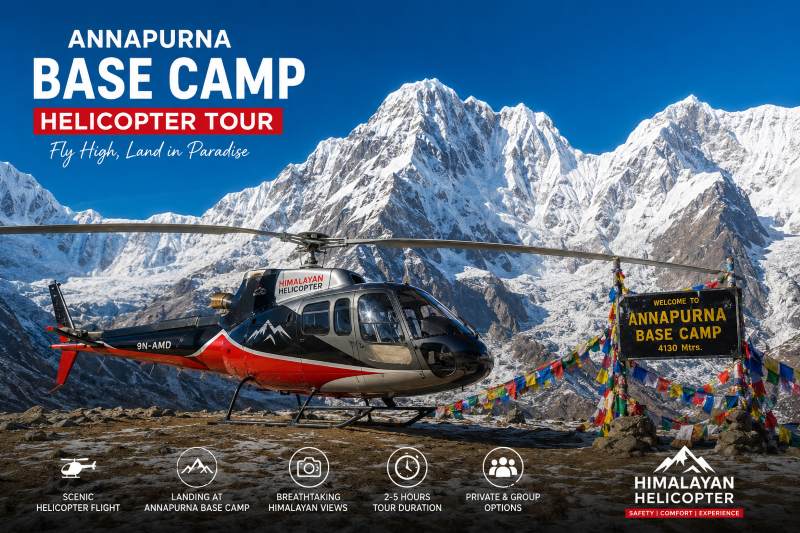
Himalayan Helicopter also offers a comprehensive range of helicopter services across Nepal, including tours to Annapurna Base Camp, Langtang, Muktinath, Upper Mustang, and other remarkable destinations, as well as helicopter rescue and evacuation services and charter flights for mountaineering expeditions.
The Everest Base Camp Helicopter Tour with Himalayan Helicopter is more than a journey to a destination — it is an encounter with the highest and most magnificent mountain landscape on the planet, delivered with the luxury, safety, and professional care that you deserve.
Whether you are visiting Nepal for the first time or returning as a seasoned Himalayan traveller, whether you are booking for yourself alone or organising an experience for a group of family members or colleagues, Himalayan Helicopter has the expertise, the aircraft, and the passion to make your Everest experience extraordinary.
Do not leave Nepal without seeing Everest. Contact Himalayan Helicopter today to reserve your seat on a shared group departure or to enquire about a private charter. Our team is available to answer every question, provide detailed pricing, assist with permit arrangements, and help you design the perfect Everest helicopter adventure.
Contact Himalayan Helicopter now. Everest is waiting.
 5 Excellent 3 Reviews form Google
Note: Group joining Date may vary on weather condition and number of people joined.
Kathmandu
Kathmandu
Kathmandu
Kathmandu
Kathmandu
Kathmandu
Kathmandu
Kathmandu
Kathmandu
Kathmandu
Kathmandu
Kathmandu
Kathmandu
Kathmandu
Kathmandu
Kathmandu
Kathmandu
Kathmandu
Kathmandu
Kathmandu
Kathmandu
Kathmandu
Kathmandu
Kathmandu
Kathmandu
Kathmandu
Kathmandu
Kathmandu
Kathmandu
Kathmandu
Kathmandu
Kathmandu
Kathmandu
Kathmandu
Kathmandu
Kathmandu
Kathmandu
Kathmandu
Kathmandu
Kathmandu
Kathmandu
Kathmandu
Kathmandu
Kathmandu
Kathmandu
Kathmandu
Kathmandu
Kathmandu
Kathmandu
Kathmandu
Kathmandu
Kathmandu
Kathmandu
Kathmandu
Kathmandu
Kathmandu
Kathmandu
Kathmandu
Kathmandu
Kathmandu
The complete tour from hotel pickup to return to your hotel takes approximately 5 to 6 hours, with the actual helicopter flying time of 3 to 4 hours. Most guests are back at their hotel with the full afternoon remaining, having completed one of the most extraordinary experiences available in Nepal.
Helicopter landings at Everest Base Camp are not standard practice on this tour. The terrain at base camp sits on the active Khumbu Glacier — an ever-shifting surface of ice, seracs, and crevasses — which makes it unsuitable as a helicopter landing site under normal operational conditions. Instead, our tour lands at Kala Patthar (5,545m), which is universally recognised as the superior viewpoint for Everest and offers a far more dramatic and photogenic experience than landing on the glacier at base camp. The tour includes an extended low-altitude overflight directly above Everest Base Camp, giving you a complete and detailed aerial view of the site.
Yes. Himalayan Helicopter operates with the highest safety standards in Nepali helicopter aviation, using fully certified aircraft, licensed and highly experienced mountain pilots, and rigorous operational protocols including weather monitoring and conservative go/no-go decision making. The tour has an excellent safety record. All guests are covered by passenger insurance included in the tour cost, and we carry emergency oxygen and first aid equipment on all flights. We encourage guests with specific safety or health concerns to contact our team directly to discuss their individual situation.
Spring (March to May) and autumn (September to November) are the recommended seasons, offering the best combination of weather stability, mountain visibility, and overall experience quality. Both seasons provide reliable early-morning flying conditions that align well with our tour schedule. Winter (December to February) offers excellent visibility and fewer crowds but significantly colder temperatures at the Kala Patthar landing. The monsoon season (June to August) is possible but involves greater weather unpredictability.
The cost varies depending on whether you book a shared group joining departure or a private charter, the time of year, the number of passengers in your group, and any customisations to the itinerary. We believe in transparent, competitive pricing and provide detailed quotes on request. Please contact Himalayan Helicopter directly for current pricing specific to your travel dates and group requirements.
Yes. All Himalayan Helicopter aircraft carry emergency oxygen equipment for use in the event of altitude-related symptoms during the tour. For guests who know they have a sensitivity to altitude or have experienced altitude sickness previously, we recommend discussing this with your physician before travel and informing our team at the time of booking so we can make appropriate provisions.
Himalayan Helicopter monitors weather conditions continuously and makes flight decisions based on safety criteria that prioritise the wellbeing of our guests and crew above all commercial considerations. If weather conditions on your scheduled tour date do not meet our safety standards, your tour will be rescheduled to the earliest suitable alternative date without any additional charge. We work with guests to accommodate rescheduling within the constraints of their overall travel itinerary, and we recommend all guests book with a degree of schedule flexibility, particularly during the monsoon season.
Yes. Entry to Sagarmatha National Park requires a valid entry permit, which is not included in the standard Himalayan Helicopter tour cost and must be obtained separately. Our team can advise you on the current permit requirements and assist with the application process. The cost of the Sagarmatha National Park permit is subject to current Nepal government fee schedules.
Yes. Private charter bookings offer a meaningful degree of itinerary flexibility. Common customisations include extended landing time at Kala Patthar for photography, alternative routing to explore different valleys or peaks, additional landings at sites such as Gokyo Lakes or Namche Bazaar, and adjusted departure times. Contact Himalayan Helicopter to discuss your specific requirements and our team will design a bespoke itinerary that meets your objectives.

 Maximum: 5 People/Helicopter
Best price guaranteed
Safe Tour Plan
Maximum: 5 People/Helicopter
Best price guaranteed
Safe Tour Plan
Response Time 0-2 Hours , Response Rate 100%
© 2026 All rights reserved. Himalayan Helicopters Pvt. Ltd.

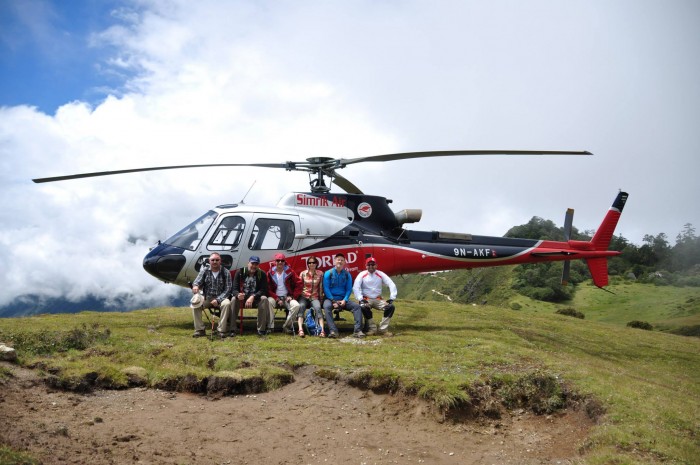
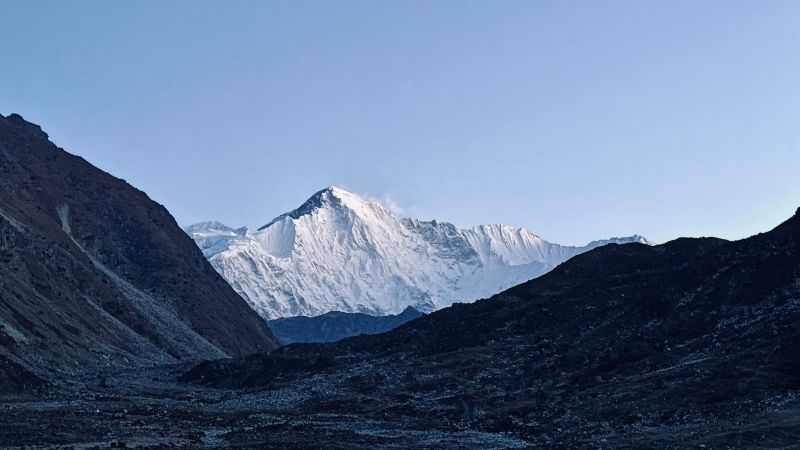
James & Charlotte WhitfieldEnglandOn April, 2026
The Single Best Morning Of Our Entire Trip To Nepal
We Booked The Private Charter For Our 10th Wedding Anniversary And It Completely Exceeded Our Expectations. Our Pilot Was Incredibly Skilled And Reassuring, Pointing Out Every Major Peak Along The Way And Giving Us As Much Time As We Wanted At Kala Patthar For Photos. Standing There With Everest Right In Front Of Us, After Only About Three Hours Of Flying, Still Feels Surreal. Breakfast At Hotel Everest View Was The Perfect Way To End The Morning — Hot Coffee, That View, And Total Silence Except For The Wind. We Were Back At Our Hotel In Kathmandu By Lunchtime And Spent The Rest Of The Day Just Talking About It. Worth Every Rupee, And The Himalayan Helicopter Team Handled Every Detail From Pickup To Drop-off Without A Hitch.
Priya NairIndiaOn May, 2026
Saw Everest Without The Two-week Trek — Perfect For My Parents
I Travelled With My Parents Who Are In Their Late 60s And Could Never Have Managed The EBC Trek, But They've Wanted To See Everest Their Whole Lives. This Tour Made It Possible. The Team Was Patient And Attentive With Them From The Early Morning Pickup Right Through To The Landing At Kala Patthar, And The Pilot Made Sure They Were Comfortable Getting In And Out Of The Helicopter At Altitude. My Father Actually Got Emotional When Everest Came Into Full View — It's A Completely Different Feeling Seeing It That Close. The Shared Group Joining Option Kept The Cost Reasonable For Three Of Us, And We Never Felt Rushed. Honestly One Of The Best Decisions We Made On Our Nepal Trip.
Lukas BergmannGermanyOn June, 2026
Incredible Value For A Photographer — Golden Light At Kala Patthar Was Unreal
I've Been Chasing Himalayan Photography For Years And This Tour Delivered More Than I Expected. We Landed At Kala Patthar Right As The Early Morning Light Was Hitting The South Face Of Everest — The Kind Of Light You Usually Only Get After Days Of Trekking And Waiting For The Weather To Cooperate. The Pilots Were Happy To Give Me A Few Extra Minutes For Shots Once They Saw I Was Working Seriously, Which I Really Appreciated. The Flight Over The Khumbu Icefall And Base Camp Itself Was Just As Impressive As The Landing — The Scale Of It From The Air Is Hard To Put Into Words. Smooth Booking Process, Professional Crew Throughout, And Genuinely One Of The Most Efficient Ways To Get World-class Everest Images In A Single Morning.