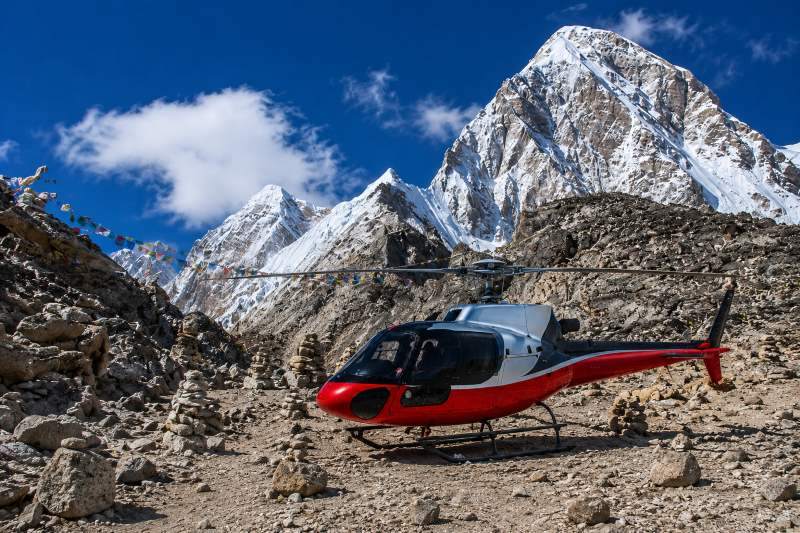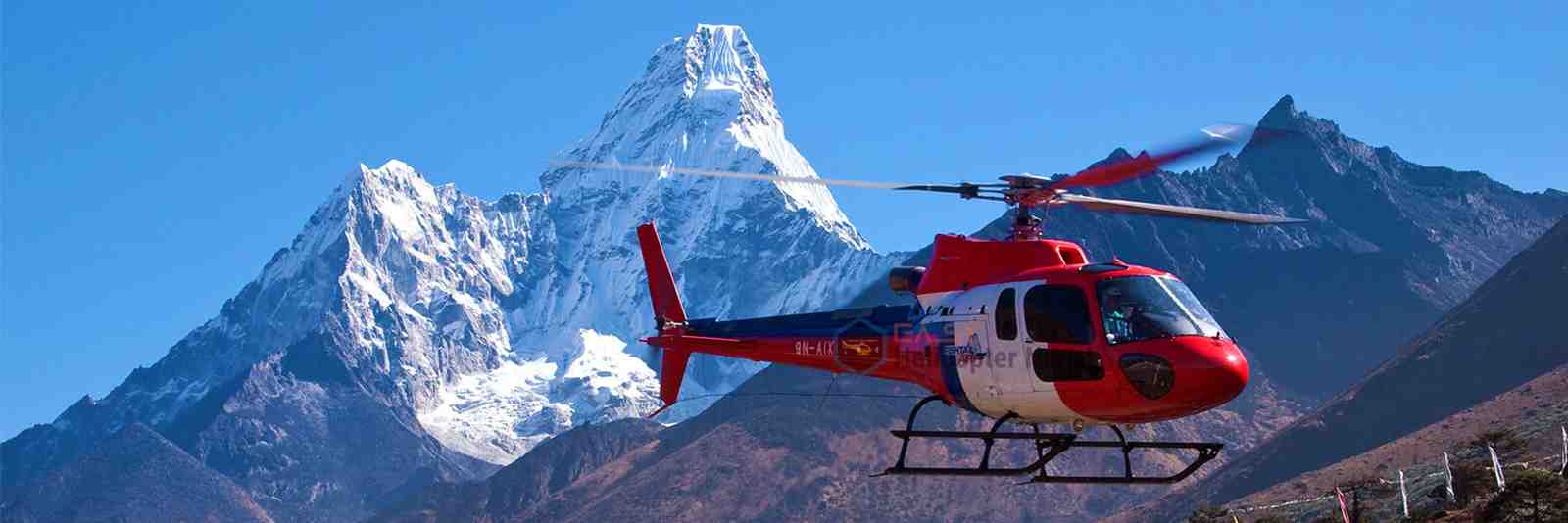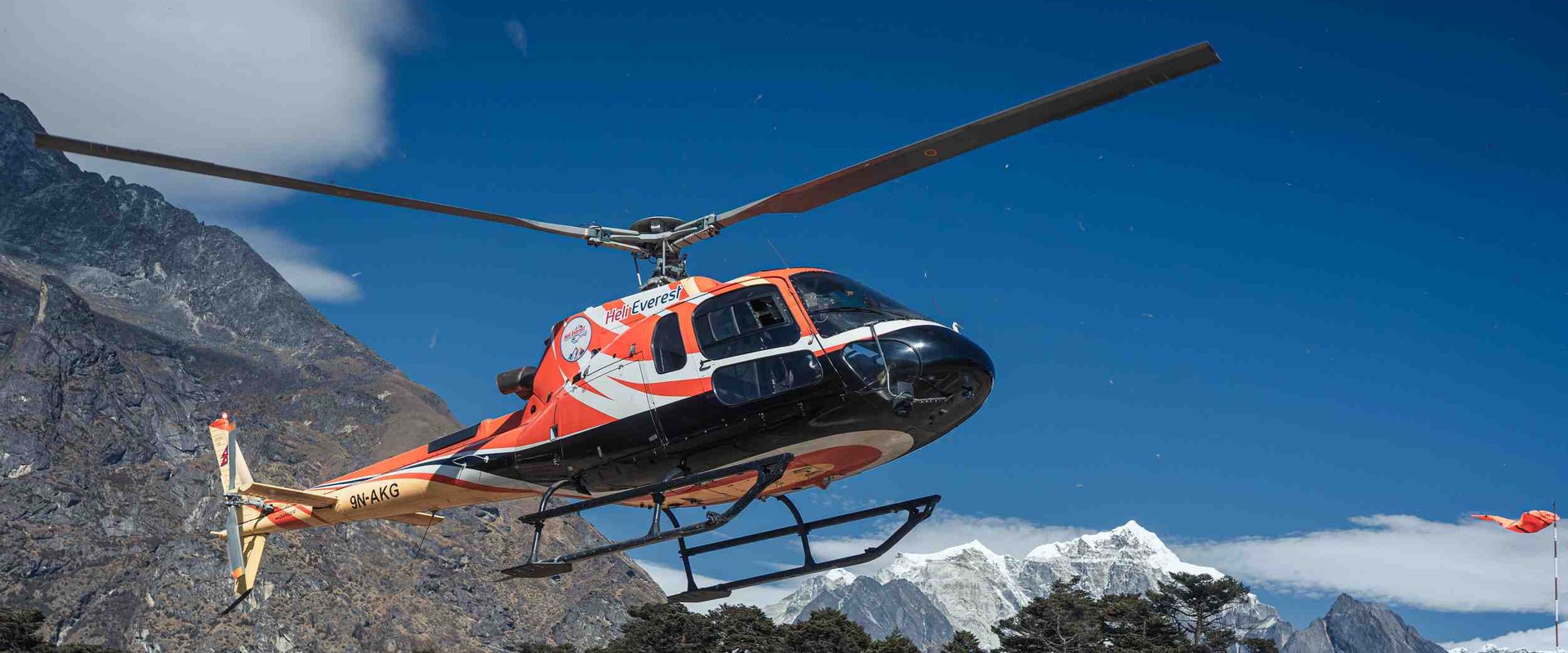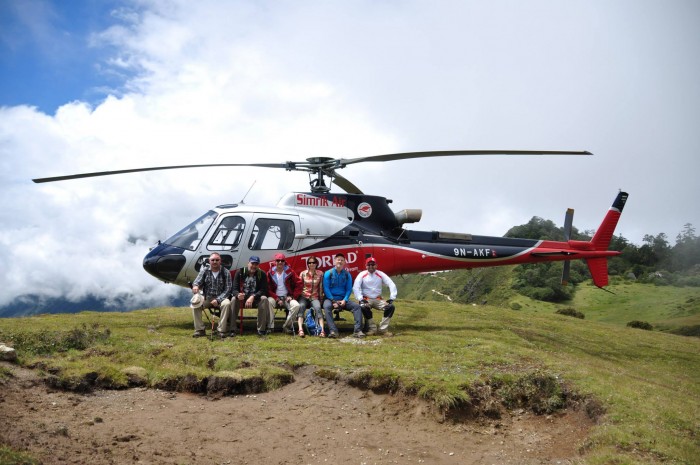
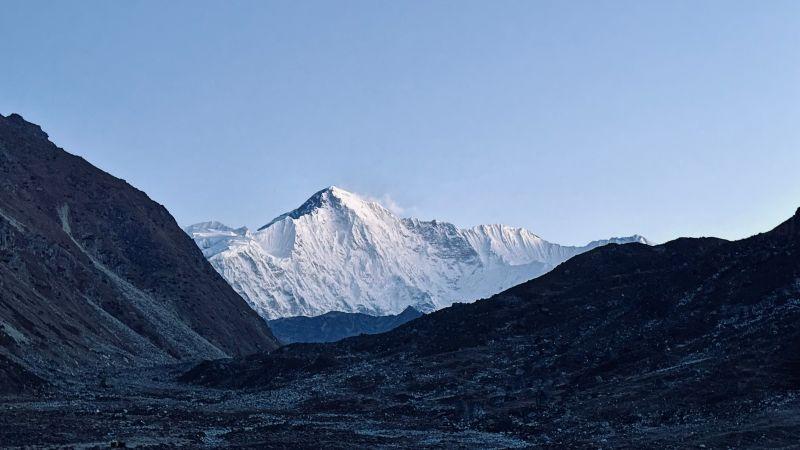
The Makalu High Camp Helicopter Shuttle is one of the most demanding and specialised aviation services Himalayan Helicopter operates anywhere in Nepal. Flying from Makalu Base Camp to the high camp positions on Makalu — the world's fifth highest mountain at 8,485 metres — this shuttle operates at altitudes where the air is so thin that helicopter performance is at the absolute outer limits of what is technically achievable, where weather windows are narrow and unpredictable, and where the margin for error in both piloting and planning is essentially zero. It is a service that exists not for tourism, but for two critical purposes: expedition logistics — repositioning teams, equipment, supplies, and personnel between Makalu Base Camp and high camp during a climbing expedition — and emergency rescue and medical evacuation from high camp positions when climbers or support personnel are in distress and cannot descend under their own power.
This shuttle is available exclusively as a private charter, operated in direct coordination with the expedition team leader, the expedition medical officer, and where applicable the relevant rescue coordination authority. There are no scheduled departures and no shared bookings. Every flight on this route is planned, assessed, and executed as a bespoke, mission-specific operation, with decisions made in real time based on weather conditions, aircraft performance at extreme altitude, the specific nature of the logistics or rescue requirement, and the professional judgement of Himalayan Helicopter's most experienced high-altitude pilots.
The routing for this shuttle departs from Makalu Base Camp rather than Kathmandu, positioning the aircraft at the closest practical staging point before the high camp approach. For expedition teams already in the field, this means Himalayan Helicopter coordinates the shuttle from Kathmandu to Makalu Base Camp first — as described in the Makalu Base Camp Helicopter Tour page — and then stages the high camp operation from base camp as the operational launch point.
This page exists to inform expedition teams, expedition agencies, and rescue coordinators of this service's availability, its operational parameters, and how to engage Himalayan Helicopter for high camp support on Makalu. If you are planning a Makalu expedition or coordinating a rescue on the mountain, contact our team directly. The information below provides the context you need to understand what this service offers and what it requires.
High-altitude expedition logistics on Makalu are extraordinarily demanding. The routes between base camp and the high camp positions on the mountain involve sustained technical climbing on glaciated terrain at extreme altitude, and moving significant quantities of equipment, food, fuel, oxygen, and supplies up the mountain by human and yak power alone is both time-consuming and physically punishing on the Sherpa and high-altitude support teams who bear the load.
The Makalu High Camp Helicopter Shuttle provides an alternative for specific logistics requirements where helicopter support is operationally viable — repositioning equipment between camp levels, delivering time-critical supplies or medical equipment to high camp, evacuating non-essential personnel from upper camps to free capacity for the summit push, or repositioning team members between camps when weather, injury, or schedule demands a faster solution than the standard climbing route allows. Every logistics flight is assessed individually based on weather, aircraft performance at the relevant altitude, load requirements, and landing site conditions at the high camp.
The second and most critical purpose of this shuttle is emergency rescue. Makalu's extreme altitude, technical terrain, and remote location make it one of the most serious rescue environments in the Himalayan range. When a climber or expedition member on the mountain is injured, suffering from serious altitude illness, or otherwise unable to descend, the difference between a successful helicopter evacuation and a fatal outcome can be measured in hours.
Himalayan Helicopter maintains the highest-performance high-altitude rescue capability available in eastern Nepal, with pilots trained specifically in extreme altitude rescue operations and aircraft equipped and maintained for performance at the margins of helicopter operational envelopes. Our team is available around the clock during the active climbing seasons for emergency rescue coordination, and we work directly with expedition leaders, the Nepal Mountaineering Association, and relevant international rescue authorities to respond to emergencies on Makalu as quickly as weather and conditions allow.
It must be stated clearly: helicopter rescue at Makalu high camp altitudes is not always possible. The altitude, the terrain, the weather, and the physical limits of helicopter performance in extremely thin air mean that some rescue scenarios cannot be reached by helicopter regardless of the operator's experience or equipment. When a rescue is operationally possible, Himalayan Helicopter will attempt it. When it is not, our team will communicate that assessment honestly and immediately so that alternative rescue plans can be activated without delay.
Operating a helicopter at Makalu high camp altitudes demands a level of skill, experience, and judgement that goes far beyond standard mountain flying. Our pilots selected for extreme high-altitude operations have accumulated thousands of hours of mountain flying time in Nepal, have extensive experience in high-altitude rescue operations across multiple Himalayan ranges, and understand the performance characteristics of their aircraft in thin air with the precision that life-critical operations require. They are not simply experienced pilots — they are among the most capable high-altitude helicopter operators in the country.
High-altitude helicopter operations at the margins of aircraft performance envelopes place extraordinary demands on every mechanical system. Himalayan Helicopter maintains its high-altitude fleet to standards specifically designed for operations in this environment, with particular attention to engine performance, rotor systems, and fuel management at extreme altitude. Every aircraft used for high camp operations is assessed before deployment for its suitability to the specific altitude, load, and weather conditions of the planned mission.
Weather on Makalu changes rapidly and unpredictably, and the window for safe helicopter operations at high camp altitude is often narrow. Himalayan Helicopter's operations team maintains continuous weather monitoring during active missions in this region, with real-time communication between the pilot, the base camp team, and our Kathmandu operations centre throughout every flight. Go/no-go decisions are made conservatively and without compromise, and no flight proceeds when conditions do not meet the safety requirements for the specific mission profile.
For Makalu expeditions in the spring and autumn climbing seasons, Himalayan Helicopter maintains emergency rescue availability around the clock. This means that when a distress call comes from the mountain, our team can begin mission planning, weather assessment, and pilot briefing immediately rather than waiting for standard business hours. The hours saved in the initial response phase can be critical in high-altitude medical emergencies where time to evacuation is the primary determinant of survival outcomes.
Himalayan Helicopter works directly with expedition leaders and medical officers before and during the climbing season to establish communication protocols, identify the specific high camp positions relevant to each expedition, and pre-plan the logistics and rescue scenarios that are most likely to arise. This advance coordination ensures that when a mission is needed — whether planned logistics or emergency rescue — our team already has the information, relationships, and plans in place to respond as quickly and effectively as possible.
This service operates exclusively as a bespoke private charter, and pricing reflects the extreme altitude, remote location, specialised equipment and pilot requirements, and mission-specific nature of every flight. Cost varies significantly based on the specific altitude and nature of the mission, prevailing weather and operational conditions, load requirements, and whether the mission is a planned logistics operation or an emergency rescue.
Contact Himalayan Helicopter directly for pricing information relevant to your specific expedition and mission requirements. For emergency rescues, cost should never be a barrier to initiating contact — call our emergency line immediately and discuss financial arrangements once the rescue operation is underway.
Transparency about what is and is not operationally possible on this route is a core part of how Himalayan Helicopter communicates with expedition teams. The following parameters define the realistic operational envelope for Makalu high camp helicopter operations.
Helicopter performance degrades significantly with altitude as the air becomes thinner and rotor efficiency decreases. The maximum altitude at which our aircraft can safely land, hover, and take off under given load and temperature conditions varies with aircraft type, load weight, temperature, wind, and other factors. Himalayan Helicopter's pilots assess these parameters for every specific mission and will communicate honestly about whether a given high camp position is within operational reach under the conditions prevailing at the time of the mission request.
Makalu high camp helicopter operations require specific minimum weather conditions — visibility, wind speed, cloud ceiling, and absence of precipitation — that are frequently absent in this environment. Our operations team assesses conditions from multiple sources before every mission and will not proceed when conditions do not meet the required minimums for safe operation. Teams requesting rescue or logistics support must understand that weather delays are a genuine possibility and plan their emergency protocols accordingly.
At extreme altitude, every kilogram of load reduces the helicopter's performance margin. Logistics missions must be planned with precise load calculations, and passengers or cargo that exceed the safe load for the specific altitude and conditions cannot be carried. Our team works with expedition logistics coordinators to plan load requirements in advance wherever possible.
High camp landing at Makalu requires a suitable landing site — adequate flat area, absence of crevasses or unstable terrain directly beneath the landing zone, and clear approach and departure paths. Expedition teams planning to use helicopter support at high camp should identify and, where possible, prepare suitable landing areas as part of their camp establishment procedures, and communicate landing site details to our team in advance.
Expedition teams planning to use Himalayan Helicopter for Makalu logistics or rescue support should contact our team during the pre-expedition planning phase, before departing Kathmandu for the mountain. This allows us to establish communication protocols, exchange relevant technical information about the specific high camp positions and their altitude and terrain characteristics, brief our pilots on the expedition's specific needs and schedule, and pre-position the relevant resources for rapid response when needed.
Throughout the active expedition period, expedition leaders should maintain direct communication contact with Himalayan Helicopter's operations team, with regular updates on the team's position, schedule, and any developing situations that may require helicopter support. Our operations team maintains a dedicated contact point for active expedition support during the climbing seasons.
Logistics missions should be requested with as much advance notice as possible, allowing adequate time for weather assessment, mission planning, and aircraft positioning. Provide our team with the specific load requirement, the target camp position and its altitude, the preferred timing window, and any relevant information about the landing site. We will assess feasibility and provide a go/no-go response as quickly as possible.
In a rescue emergency, contact Himalayan Helicopter's emergency line immediately with the following information: the location of the casualty (camp position, altitude, GPS coordinates where available), the nature of the medical situation, the number of people requiring evacuation, current weather conditions at the site as observed from the mountain, and the expedition leader's contact details. Our team will begin mission assessment immediately and communicate our response and estimated response timeline as quickly as possible.
Expedition teams operating on Makalu should incorporate helicopter rescue planning into their expedition safety protocols from the earliest planning stage. This includes registering the expedition with the Nepal Mountaineering Association and the relevant embassy, ensuring all expedition members carry comprehensive expedition insurance with helicopter rescue coverage — this is non-negotiable and must be verified before the expedition departs Kathmandu — establishing clear internal communication and decision-making protocols for when to call for helicopter rescue, and providing Himalayan Helicopter with all relevant contact and position information before leaving base camp for the mountain.
Helicopter rescue on Makalu is a last resort when ground-based rescue is not possible or insufficient. However, early activation of the helicopter rescue option — before a situation becomes critical — is almost always more effective than waiting until a casualty is severely compromised. If there is any doubt about whether the situation warrants a helicopter rescue call, make the call. Our team will assess feasibility and respond honestly. The cost of an unnecessary call is insignificant compared to the cost of a delayed one.
For pre-expedition planning, logistics mission requests, and non-emergency enquiries, contact Himalayan Helicopter through our standard operations channels as early as possible in your expedition planning cycle.
For emergency rescue requests, contact our 24-hour emergency line immediately. Do not delay a rescue call due to uncertainty about cost, feasibility, or any other consideration — call first and let our team assess the situation with you in real time.
Himalayan Helicopter is committed to supporting every Makalu expedition that entrusts its high-altitude logistics and rescue needs to us, and to responding to every emergency on this extraordinary and demanding mountain with the full capability, experience, and professionalism that our guests and the mountain deserve.
Helicopter operations at Makalu high camp altitudes are possible under specific conditions but represent operations at the outer limits of helicopter performance in Nepal. Whether a specific high camp position is reachable depends on the precise altitude, the aircraft type, the load, the temperature, and the prevailing weather conditions. Our pilots assess these parameters for every specific mission and will communicate honestly about what is operationally possible.
Response time depends on weather conditions, aircraft positioning, and time of day. During the active climbing season, Himalayan Helicopter maintains 24-hour emergency availability, and our team begins mission assessment immediately on receiving an emergency call. The time from first contact to aircraft departure varies with conditions but our team works to minimise this as much as operationally safe. Pre-expedition coordination that establishes communication protocols and mission information in advance significantly reduces response time.
Most comprehensive expedition insurance policies include helicopter rescue coverage, but the specific terms — maximum altitude, geographical scope, and coverage limits — vary by policy. Expedition members must verify that their insurance covers helicopter rescue at Makalu's specific altitudes before the expedition departs. Himalayan Helicopter requires confirmation of insurance coverage for non-emergency logistics missions; for emergency rescues, we activate the mission first and resolve insurance details subsequently.
Location of the casualty (camp name, altitude, GPS coordinates where available), nature of the medical situation, number of people requiring evacuation, current observed weather at the site, and the expedition leader's direct contact details. Provide as much information as possible but do not delay the call to gather information — call immediately and provide additional details as they become available.
 Maximum: 5 People/Helicopter
Best price guaranteed
Safe Tour Plan
Maximum: 5 People/Helicopter
Best price guaranteed
Safe Tour Plan
Response Time 0-2 Hours , Response Rate 100%
© 2026 All rights reserved. Himalayan Helicopters Pvt. Ltd.